
Do you know what great changes have taken place in Baroque art since the Renaissance?
author: sun flower
2024-04-18
"Baroque" is an art style that flourished in Europe between 1600 and 1750. It arose in Italy during the Counter-Reformation, developed in most parts of Europe where Catholicism was practiced, and later spread to Latin American and Asian countries as Catholicism spread. As an art style that had a profound influence on time and space, the rise of Baroque was closely related to the religion of the time.
Not only in painting, Baroque art represents the entire field of art, including music, architecture, decorative arts, etc., and the connotation is extremely complex. But the most basic characteristics are to break the seriousness, subtlety and balance of the Renaissance, advocate luxury and style, pay attention to the expression of strong emotions, the atmosphere is warm and tense, and has a piercing and moving artistic effect.
Not only in painting, Baroque art represents the entire field of art, including music, architecture, decorative arts, etc., and the connotation is extremely complex. But the most basic characteristics are to break the seriousness, subtlety and balance of the Renaissance, advocate luxury and style, pay attention to the expression of strong emotions, the atmosphere is warm and tense, and has a piercing and moving artistic effect.

Characteristics:
1. It has the characteristics of luxury, it has both religious characteristics and hedonistic colors;
2. It is a passionate art, which breaks the quiet and harmonious of reason, has a strong romantic color, and emphasizes the rich imagination of the artist;
3. It strongly emphasizes the movement and movement and change can be said to be the soul of Baroque art;
4. It pays great attention to the sense of space and three-dimensionality of the work;
5. It has a comprehensive approach, Baroque art emphasizes the comprehensive means of art form, such as attaching importance to architecture and sculpture in architecture, Synthesis of paintings. In addition, Baroque art also absorbed some elements and imaginations in the fields of literature, drama, music, etc.
6. It has a strong religious color, and religious themes occupy a dominant position in Baroque art;
7. Most Baroque artists have a tendency to stay away from life and the times, for example, in some zenith paintings, the human figure becomes insignificant, like some patterns.

Representative figures: Rubens, Bernini
Specific performance:
(1) Make good use of momentum: whether it is practical, such as a wave-like wall or an ever-changing jet-like fountain; It is also subtle, such as depicting a dynamic or moving figure (no longer the static representation of the classical Renaissance, but the dynamic of a skewed configuration). Attempt to express or imply a sense of infinity; For example, the road that stretches to the horizon, the mural that shows the illusion of an endless sky, and the mirror technique that uses the effect of changing perspective to make it confusing.
(2) Emphasizing light: Design a kind of artificial light, rather than natural light, to produce a dramatic atmosphere, and create a space with a more three-dimensional, deep, and layered sense than the Renaissance. The contour lines are blurred, the composition is organic, and there is a sense of wholeness. Pursue dramatic, exaggerated, and see-through effects. Regardless of the boundaries between different art forms, it integrates architecture, painting, sculpture and other art forms.
The development of the Classicist school
Related Article
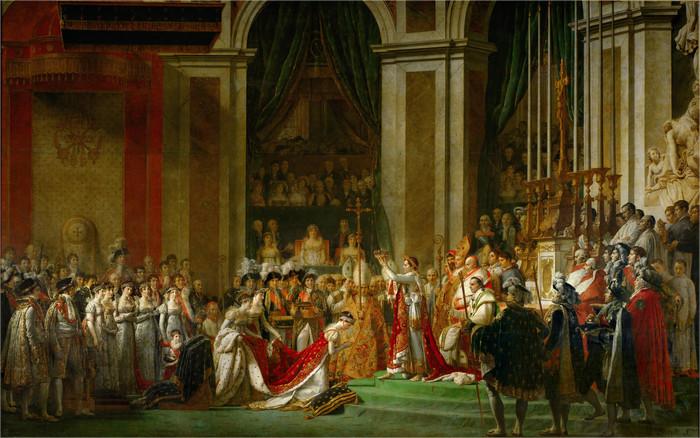
Classicism is the expression of the classicism popular in Europe in the 18th century, and they were dissatisfied with the extravagant Rococo art that served the aristocracy, and sought new themes from classical Greek and Roman art.
The development of the Classicist school

Realism, as an artistic movement, emerged at the same time as the French Revolution of 1848. The painter Courbet and the theorist Jean Fleury were its spiritual leaders.
Post-Renaissance realism
The Romantic school of painting took affirmation and praise of people's spiritual values and the struggle for individual emancipation and human rights as its ideological principles. In painting, he advocates the depiction of personality and characteristics and the expression of emotions.
Post-Renaissance Romanticism
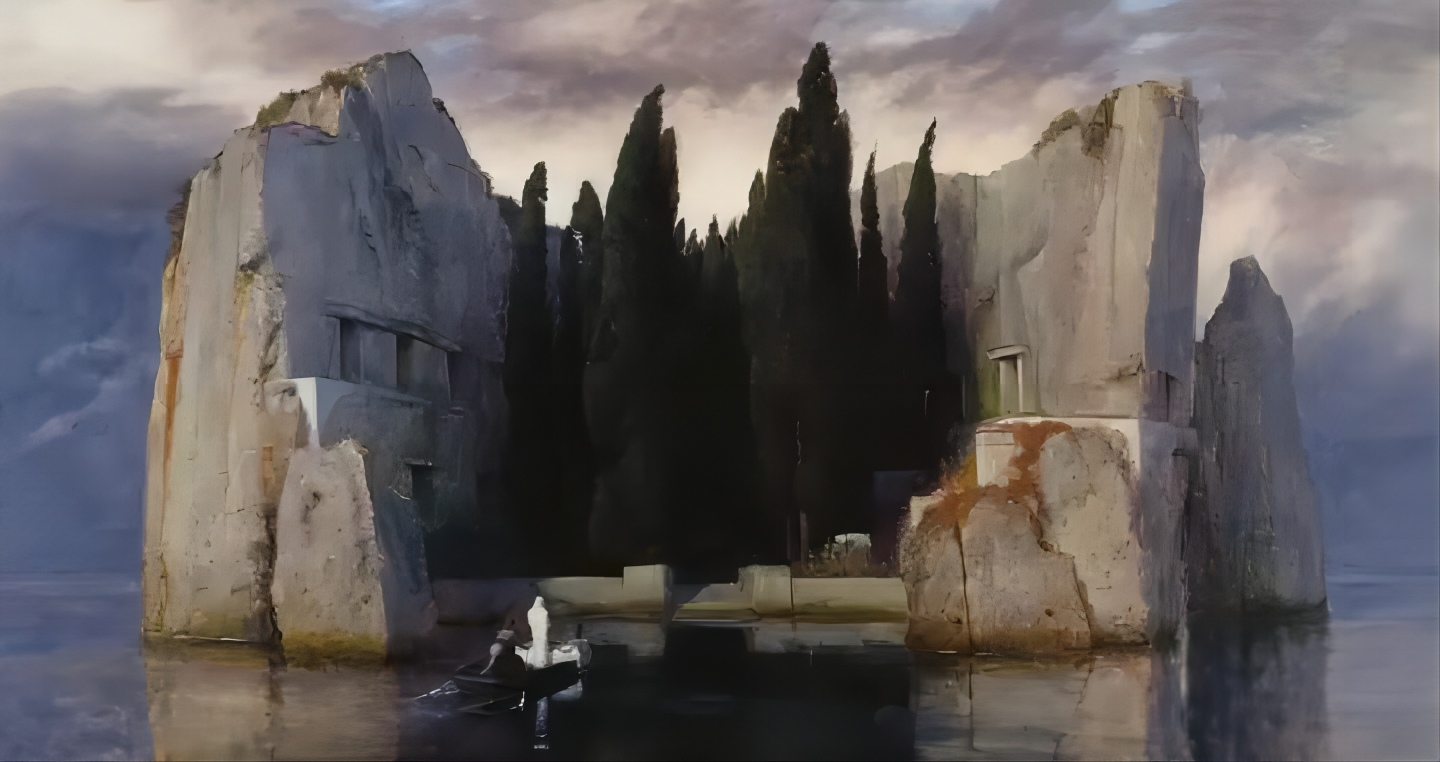
Arnold Bocklin, born in Basel to a merchant family, traveled in Europe and was influenced by Italian art, Roman classical art inspired many of his later important works, and the frescoes of Naples and Pompeii had a profound influence on his technique and style.
Symbolist painter: Arnold Böcklin