
Symbolist painter: Arnold Böcklin
author: sun flower
2024-04-03
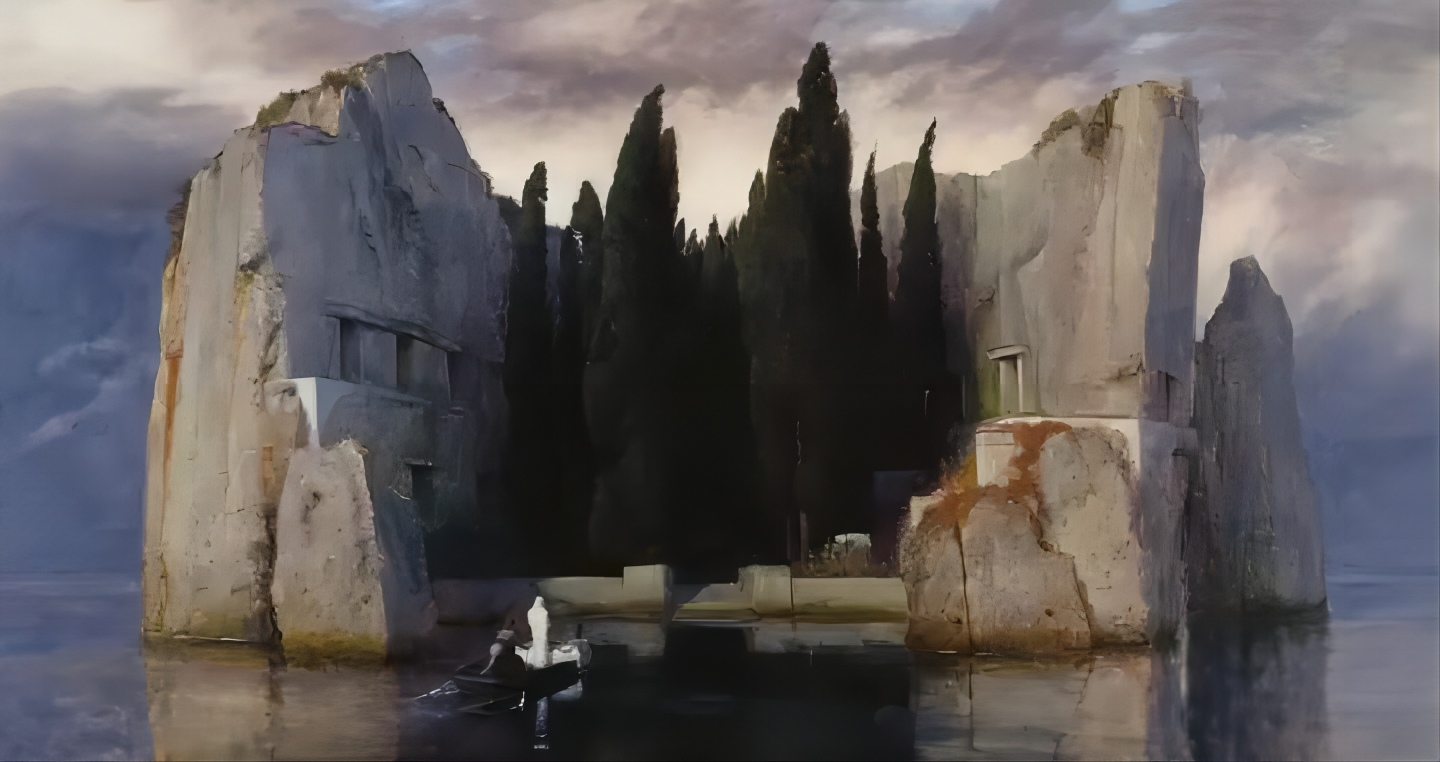
Arnold Bocklin, born in Basel to a merchant family, traveled in Europe and was influenced by Italian art, Roman classical art inspired many of his later important works, and the frescoes of Naples and Pompeii had a profound influence on his technique and style. In his early years, he studied landscape painting in Düsseldorf, Germany, where he met Feuerbach, and the two became good friends. Since then, he has traveled extensively to Brussels, Zurich, Geneva and Rome to see the works of classical and Renaissance masters and to explore the landscapes of the Mediterranean coast, an influence that gives his style an allegorical and mystical tinge.
In 1858 he taught at the Weimar Academy of Fine Arts, where he taught until 1861.
In 1866, he settled in Basel, Switzerland, where he created decorative frescoes on mythological themes for the Kunsthalle Basel.
In 1871, he moved to Munich.
In 1885, he moved to Hottingen, Switzerland, and finally settled in Fiesol, a small town near Florence, Italy.
In 1858 he taught at the Weimar Academy of Fine Arts, where he taught until 1861.
In 1866, he settled in Basel, Switzerland, where he created decorative frescoes on mythological themes for the Kunsthalle Basel.
In 1871, he moved to Munich.
In 1885, he moved to Hottingen, Switzerland, and finally settled in Fiesol, a small town near Florence, Italy.
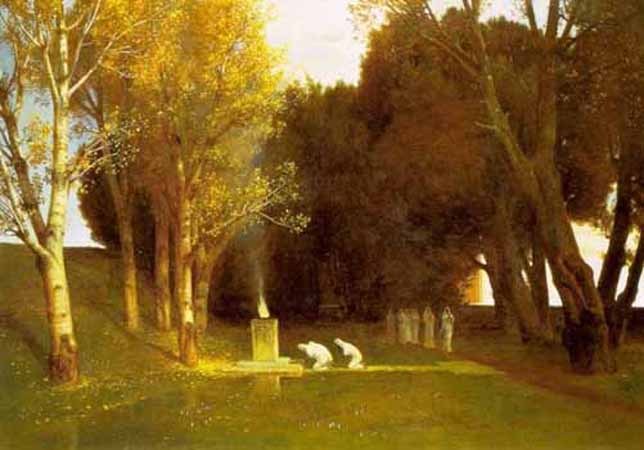
Famous masterpiece "Dead Island": Böcklin's most famous work is his five-panel "Dead Island" series, which is also his most controversial work, "Dead Island", with its cliffs and eerie eerie, the so-called white-clad Grim Reaper stands quietly on the bow of the ship, bringing the soul to the place of no return. The mystical allegorical painting presents the opposition between life and death, and the endless contemplation of death. The work was painted influenced by the atmosphere of the English cemetery in Florence, where his young daughter is buried. His works are full of mysterious, fantastical atmosphere, but there are classical buildings that depict scenes of death and mystery and melancholy. He created a strange atmosphere that seemed to stay in a dream forever, and became a source of inspiration for countless artists in later generations.
His later works became increasingly subjective, often depicting mythological animals and mystical subjects such as Pos the Monster, Black Death, Odysseus and Calypso, etc.
"Prometheus", the theme is taken from Greek mythology: Prometheus was bound to a mountain for stealing fire and offending the gods. Prometheus's limbs melt into the shadows of the mountain, his body illuminated by the sunlight shining through the dark clouds, and the figure is in perfect harmony with nature. This is Böcklin's celebration of nature's heroism.
"Holy and Solemn Forest" A group of white-robed believers worship a tombstone, and the distance of the forest is a piece of light, how intriguing. Just like Nietzsche's poem "To the Unknown God"
"Böcklin was a unique, proud, somewhat eccentric artist who experimented with flying in his garden. He did not like to name his works, and he once stated that the purpose of his paintings was to make people dream: "Just as the task of poetry is to express feelings, so is painting." A painting should give people the same thinking and emotion as poetry and music", "painting should be able to penetrate into people's souls like music, otherwise, it will be just a stupid handicraft", "the praise of beauty will never end".
Post-Renaissance Romanticism
How many stages have Impressionism gone through so far?
Related Article

"Baroque" is an art style that flourished in Europe between 1600 and 1750. It arose in Italy during the Counter-Reformation, developed in most parts of Europe where Catholicism was practiced, and later spread to Latin American and Asian countries as Catholicism spread. As an art style that had a profound influence on time and space, the rise of Baroque was closely related to the religion of the time.
Do you know what great changes have taken place in Baroque art since the Renaissance?
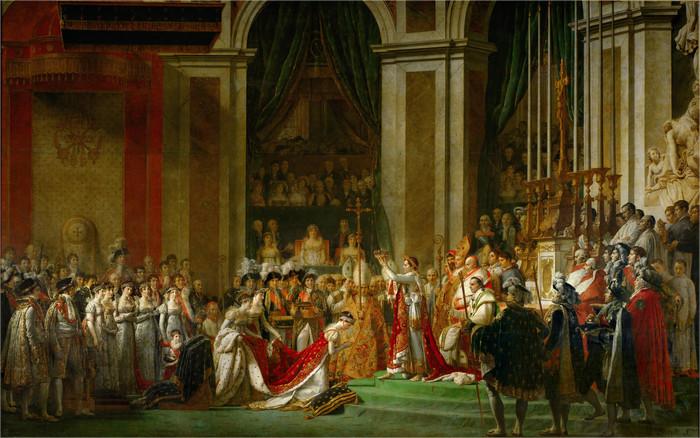
Classicism is the expression of the classicism popular in Europe in the 18th century, and they were dissatisfied with the extravagant Rococo art that served the aristocracy, and sought new themes from classical Greek and Roman art.
The development of the Classicist school
Realism, as an artistic movement, emerged at the same time as the French Revolution of 1848. The painter Courbet and the theorist Jean Fleury were its spiritual leaders.
Post-Renaissance realism
The Romantic school of painting took affirmation and praise of people's spiritual values and the struggle for individual emancipation and human rights as its ideological principles. In painting, he advocates the depiction of personality and characteristics and the expression of emotions.
Post-Renaissance Romanticism