
How many stages have Impressionism gone through so far?
author: sun flower
2024-03-25
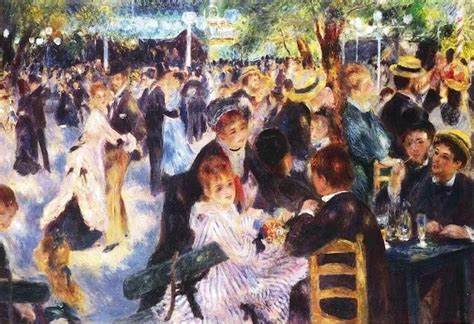
The development of Impressionism went through three stages: early impressionism, neo-impressionism, and post-impressionism.
1. The Birth of Impressionism: ln 1874, a group of young painters held the first exhibition of Impressionist paintings in an apartment on Avenue Capisina in Paris, with 31 Impressionist painters participating in the exhibition. to challenge the official salons. Painters such as Monet, Renoir, Pissarro, Sisley, Degas, Cézanne, and Morisot not only had different personalities and talents, but also, to some extent, different ideas and tendencies. But they were born in the same era, had the same experiences, and fought against the same opposition. They embraced the ridiculous title of "Impressionism" given to them by some of the magazine's satirical writers.

2. The main representatives of Impressionism: Impressionism is a painting school born in France in the second half of the 19th century, and its representatives include Monet, Manet, Pissarro, Renoir, Sisley, Degas, Corot, Morisot, Baziou, etc. They inherited the tradition of Courbet, the predecessor painter of French Realism, to "make art oriented to contemporary life", so that their creations further got rid of the dependence on history, mythology, religion and other themes, and got rid of the constraints of traditional painting programs that tell stories. On the street, he puts the fresh and vivid perception of nature in the first place, carefully observes the natural scenery bathed in light, seeks and grasps the warm and cold changes and interactions of colors, and records the ever-changing light and color effects on the canvas with a seemingly random but accurate grasp of the object, leaving an eternal image of the moment. This method of sketching from direct exterior light, the vivid impressions captured and the various styles it presents, cannot but be said to be the pioneering work of Impressionist painting and the revolution of painting.

3. Creative Method: Impressionism advocates the seven colors of red, orange, yellow, green, blue, and purple according to the solar spectrum to reflect the instantaneous impression of the natural world.
4. Stylistic characteristics: Impressionism does not create based on reliable knowledge, but paints with momentary impressions. Painters grasp a characteristic side to paint, so they have to fly the brush to apply the color directly to the canvas, they can only think more about the overall effect of the painting, and less about the details. Impressionism paints with a rough brushwork, and the work lacks embellishment, which is a kind of sloppy brushwork.
5. Representative works: Manet: 《Lunch on the Grass》, 《Piper Boy》, Monet: 《Sunrise Impression》, 《Pond Water Lilies》, 《Rouen Cathedral》, Renoir: 《The Ball at the Moulin Rouge》, Alfred Sisley: 《The Boat in the Flood》
Symbolist painter: Arnold Böcklin
Appreciation of Leonardo da Vinci's "Mona Lisa".
Related Article

"Baroque" is an art style that flourished in Europe between 1600 and 1750. It arose in Italy during the Counter-Reformation, developed in most parts of Europe where Catholicism was practiced, and later spread to Latin American and Asian countries as Catholicism spread. As an art style that had a profound influence on time and space, the rise of Baroque was closely related to the religion of the time.
Do you know what great changes have taken place in Baroque art since the Renaissance?
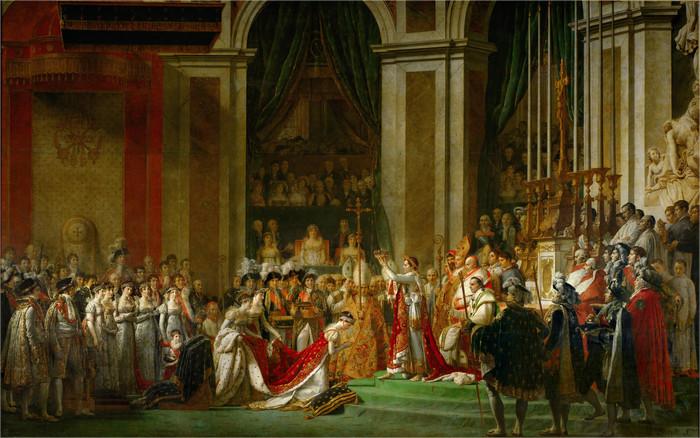
Classicism is the expression of the classicism popular in Europe in the 18th century, and they were dissatisfied with the extravagant Rococo art that served the aristocracy, and sought new themes from classical Greek and Roman art.
The development of the Classicist school
Realism, as an artistic movement, emerged at the same time as the French Revolution of 1848. The painter Courbet and the theorist Jean Fleury were its spiritual leaders.
Post-Renaissance realism
The Romantic school of painting took affirmation and praise of people's spiritual values and the struggle for individual emancipation and human rights as its ideological principles. In painting, he advocates the depiction of personality and characteristics and the expression of emotions.
Post-Renaissance Romanticism