
Do you know what are the characteristics of oil paintings of figures?
author: sun flower
2024-02-28
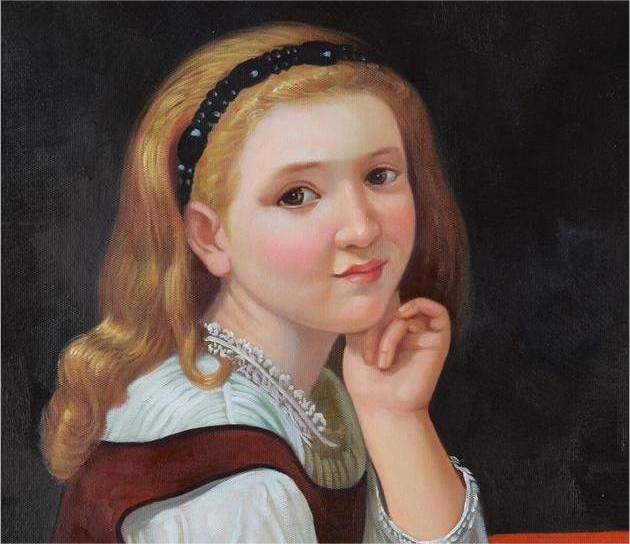
Do you know what are the characteristics of oil paintings of figures?
The characteristics of figure oil painting are: the real, accurate, full and delicate character depiction, the use of color to the extreme, the diversity of oil painting genres and the richness of the works.
1. The character portrayal is true, accurate, full and delicate
Since Leonardo da Vinci in the early Renaissance, painters have applied anatomy and perspective to the principles of human body structure to figure painting, bringing realistic oil painting to an unprecedented height. After the invention of photographic technology, realistic oil painting used new technology to innovate and develop the art of oil painting, resulting in hyper-realistic oil painting, which made oil painting realistic and photographic.

2. The use of color has been brought to the extreme
Due to the characteristics of oil painting itself, special attention was paid to the use of color from the very beginning of its production. Titian, one of the three masters of the Venetian school of painting in Italy during the Renaissance, was a top master of the use of color, and he was known as "a great painter who provided a complete set of colors in Venice and was the best at using color to express people's thoughts and emotions".

3. The diversity of oil painting genres and the richness of works
Since the birth of Western oil painting, especially since the 19th century, various genres have emerged one after another. The most important ones are classicism, realism, impressionism, abstraction, hyperrealism, etc.
Oil painting was originally a tempera painting in European painting before the 15th century, and was later developed by the Dutch painter Jan van Eyck (1385-1441) who improved the painting materials and other materials.
Modern oil painting mostly uses linseed oil to mix pigments, and paints on treated cloth or wooden boards, because oil paint does not change color after drying, and the harmony of multiple colors will not become dirty, and painters can paint rich and realistic colors. The oil paint is opaque and has a strong covering power, so it can be covered layer by layer from deep to shallow when painting, so that the painting produces a three-dimensional effect.
Since the 18th century, the art of oil painting has also undergone earth-shaking and devastating changes under the impact of multiple factors such as society, culture, and technology. More genres, more thinking, richer creations, more profound and more influential theories, exciting, deconstructing, rebelling, competing for beauty, and a hundred flowers blooming.
Chinese oil painting first appeared in coffin utensils, according to Zhou Li, Hanshu and other documents, more than 2,000 years ago China has a history of painting with "oil". It is commonly said that after Matteo Ricci brought the statue of God and the Virgin Mary to China in 1581, he began to paint oil in China, and one of the works of "Wood Beauty", although it lasted for 500 years, can still be vaguely seen in the simplicity and depth of the painting style.
Modern oil painting mostly uses linseed oil to mix pigments, and paints on treated cloth or wooden boards, because oil paint does not change color after drying, and the harmony of multiple colors will not become dirty, and painters can paint rich and realistic colors. The oil paint is opaque and has a strong covering power, so it can be covered layer by layer from deep to shallow when painting, so that the painting produces a three-dimensional effect.
Since the 18th century, the art of oil painting has also undergone earth-shaking and devastating changes under the impact of multiple factors such as society, culture, and technology. More genres, more thinking, richer creations, more profound and more influential theories, exciting, deconstructing, rebelling, competing for beauty, and a hundred flowers blooming.
Chinese oil painting first appeared in coffin utensils, according to Zhou Li, Hanshu and other documents, more than 2,000 years ago China has a history of painting with "oil". It is commonly said that after Matteo Ricci brought the statue of God and the Virgin Mary to China in 1581, he began to paint oil in China, and one of the works of "Wood Beauty", although it lasted for 500 years, can still be vaguely seen in the simplicity and depth of the painting style.
Where did the painting come from?
How to choose a canvas?
Related Article

"Baroque" is an art style that flourished in Europe between 1600 and 1750. It arose in Italy during the Counter-Reformation, developed in most parts of Europe where Catholicism was practiced, and later spread to Latin American and Asian countries as Catholicism spread. As an art style that had a profound influence on time and space, the rise of Baroque was closely related to the religion of the time.
Do you know what great changes have taken place in Baroque art since the Renaissance?
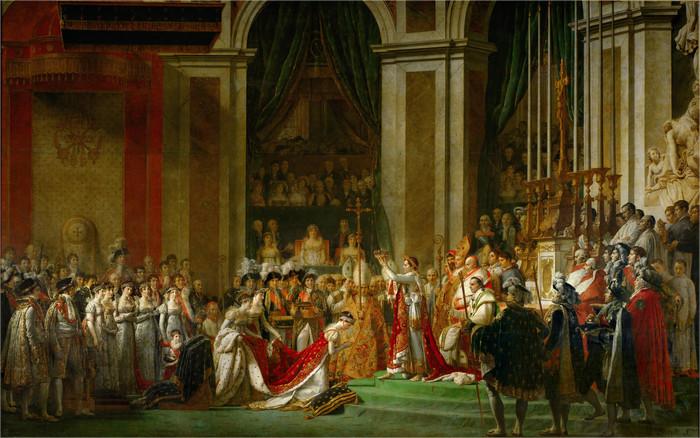
Classicism is the expression of the classicism popular in Europe in the 18th century, and they were dissatisfied with the extravagant Rococo art that served the aristocracy, and sought new themes from classical Greek and Roman art.
The development of the Classicist school
Realism, as an artistic movement, emerged at the same time as the French Revolution of 1848. The painter Courbet and the theorist Jean Fleury were its spiritual leaders.
Post-Renaissance realism
The Romantic school of painting took affirmation and praise of people's spiritual values and the struggle for individual emancipation and human rights as its ideological principles. In painting, he advocates the depiction of personality and characteristics and the expression of emotions.
Post-Renaissance Romanticism